No products
Search
Latest articles
 The 8 Grand Crus of Vosne-Romanée
  Michelin Grapes: the 2026 ranking of Bordeaux châteaux
  Château Rayas and the Reynaud family’s treasures
 Moutai : China’s Legendary Spirit Fascinating the World
Published on : 2026-05-23 11:05:57
Categories :

Moutai: China’s Legendary Spirit Fascinating the World
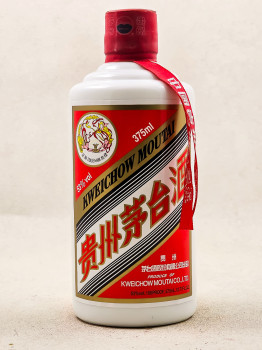
In the world of great spirits, certain names transcend the simple status of a beverage to enter a cultural, diplomatic, and almost sacred dimension. In France, we immediately think of the finest cognacs, aged armagnacs, or collectible whiskies. In China, this role belongs to Moutai. Mysterious to Western palates, adored by Asian collectors, and served at state banquets for generations, Moutai is far more than an alcohol: it is a national symbol. Behind its iconic white and red bottle lies one of the world’s most complex production traditions, capable of transforming a simple grain of sorghum into a spirit of exceptional aromatic depth. Long reserved for the Chinese market, Moutai is now attracting the curiosity of international connoisseurs. Its unique style, intriguing umami notes, and near-artisanal craftsmanship have made it one of the most prestigious spirits on the planet today.
Moutai, the Historic Jewel of Chinese Baijiu
Moutai belongs to the great family of “baijiu,” traditional Chinese eaux-de-vie. Distilled mainly from red sorghum and wheat, baijiu has been consumed in China for centuries and is now the world’s most consumed spirit by volume. Among the countless existing styles, Moutai dominates the so-called “sauce aroma” category. An intriguing name that immediately evokes notes of soy sauce, fermented grains, cocoa, dried fruits, and deep spices. Originating from the town of Maotai in the mountainous province of Guizhou, this spirit became internationally famous after winning a medal at the San Francisco World Expo in 1915. Later, it became the official spirit served at major Chinese diplomatic receptions, notably under Mao Zedong.
One of the Most Complex Production Methods in the World
While most modern spirits seek efficiency, Moutai still follows an extraordinarily long and demanding production process. This ancestral method is based on a complete one-year production cycle.
The “12-987” Principle
- 1 full year of production
- 2 grain additions
- 9 successive cooking stages
- 8 fermentations
- 7 distillations and spirit collections
This unique ritual requires the same grain of sorghum to undergo multiple rounds of cooking, fermentation, and distillation over many months. Very few spirits in the world rely on such an intensive and repetitive process.
The Central Role of Red Sorghum
Moutai is produced from a specific variety of sorghum, rich in starch and strong enough to withstand numerous cooking phases. Unlike the barley used in whisky or the grapes used in Armagnac, sorghum develops a deeply cereal-forward and spicy aromatic profile here. Throughout fermentation, microorganisms slowly transform sugars into hundreds of complex aromatic compounds. Some researchers estimate that sauce aroma baijiu contains more than 500 distinct aromatic molecules.
An Extraordinary Solid-State Fermentation
One of the most fascinating aspects of Moutai lies in its so-called “solid-state” fermentation. Unlike whisky, rum, or cognac, where fermentation takes place in liquid environments, Moutai ferments in a mass of moist grains with almost no free liquid. The grains are mixed with a traditional fermentation starter called “Daqu,” produced at high temperatures from wheat. This natural microbial culture forms the soul of the spirit. Fermentation then takes place in warm and controlled environments, encouraging the development of specific bacteria and yeasts capable of generating Moutai’s signature aromas.
Why Is the Taste of Moutai So Unique?
Tasting Moutai for the first time is often a memorable experience. While some spirits aim for immediate smoothness, Moutai imposes an intense, almost disorienting personality.
Its aromatic notes often evoke:
- fermented soy sauce,
- dark cocoa,
- dried mushrooms,
- toasted spices,
- candied fruits,
- roasted grains.
This aromatic power comes directly from its fermentation method and the microbiological richness developed during its long maturation. Some enthusiasts even describe it as an “umami” spirit, as its depth recalls certain great fermented gastronomic products. Moutai’s unique character also rests on its terroir. The Maotai region benefits from a humid and warm climate particularly favorable to the development of the microorganisms essential for fermentation. As with the finest wines, the notion of origin is crucial here. Many producers now attempt to imitate the “sauce aroma” style, but very few achieve the depth and balance of authentic traditional Moutai.
Moutai, the Ultimate Symbol of Chinese Luxury
In China, gifting a bottle of Moutai carries strong social significance. The spirit accompanies major celebrations, diplomatic dinners, and the most prestigious business events. Some older vintages now achieve remarkable prices at auctions, further reinforcing its iconic status. Kweichow Moutai has even become the world’s most valuable spirits brand, surpassing many Western giants.
How to Drink Moutai
Traditionally served at room temperature in small glasses, Moutai should be enjoyed slowly to allow its complex aromas to evolve. Western enthusiasts are also discovering its gastronomic potential. Its powerful profile pairs remarkably well with spicy cuisine, grilled meats, smoked dishes, and foods rich in umami. More and more international bartenders are also exploring baijiu’s potential in high-end cocktails, offering a new gateway into this still little-known world in Europe.
Moutai Between Ancient Tradition and Modern Fascination
Moutai does not seek to seduce immediately. It intrigues, surprises, and sometimes unsettles. Yet behind this singularity lies one of the most sophisticated distillation processes in the world, passed down from generation to generation. In a spirits universe often dominated by international standards, Moutai remains profoundly unique. A spirit of culture, patience, and terroir, capable of opening a fascinating window onto Chinese gastronomic history. Discovering Moutai ultimately means stepping away from conventional paths to explore one of the oldest and most prestigious spirit traditions on the planet.