The 8 Grand Crus of Vosne-Romanée
  Michelin Grapes: the 2026 ranking of Bordeaux châteaux
  Château Rayas and the Reynaud family’s treasures
The 8 Grand Crus of Vosne-Romanée: exceptional Burgundy wines
Vosne-Romanée is undoubtedly one of the most evocative villages. Here, distances are measured in just a few hundred metres. Yet behind these neighbouring plots lie names that have acquired a reputation far beyond Burgundy: Romanée-Conti, La Tâche, Richebourg, La Romanée, Romanée-Saint-Vivant, La Grande Rue, Grands-Échezeaux and Échezeaux. Just eight Grand Crus. Eight terroirs, some of which cover only a few hectares, or even less than one hectare. On the scale of Burgundy, this concentration of legendary plots is truly remarkable. This is also what makes Vosne-Romanée so fascinating. To understand these wines, one must therefore look at the land before looking at the label. In Vosne-Romanée, just a few rows of vines can be enough to completely change the personality of a wine.
One village, eight Grand Crus
A small geographical clarification is worth making before exploring these eight climats. Six Grand Crus are located in the commune of Vosne-Romanée. The other two, Échezeaux and Grands-Échezeaux, are located in the neighbouring commune of Flagey-Échezeaux. They nevertheless all belong to the same exceptional group surrounding Vosne-Romanée. The vineyards stretch across the slopes of the Côte de Nuits, generally facing east, between approximately 250 and 310 metres above sea level. All eight Grand Cru appellations are exclusively planted with Pinot Noir. What immediately stands out is the diversity of their respective sizes. Échezeaux covers more than 36 hectares, while La Romanée covers just 0.85 hectares. Between these two, the other Grand Crus form a mosaic of different sizes, soils and owners. This difference in scale also explains the diversity of bottles one may encounter. Some Grand Crus are shared between several estates, while others have remained monopoles, associated with a single owner.
The 8 Grand Crus of Vosne-Romanée
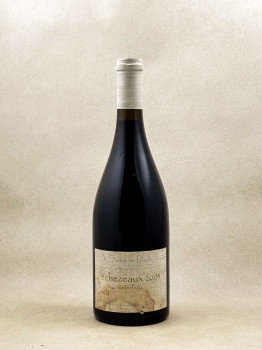
Échezeaux
With more than 36 hectares, Échezeaux is the largest of the eight Grand Crus associated with Vosne-Romanée. It is located in the commune of Flagey-Échezeaux, between Clos de Vougeot and the Premier Crus of Vosne-Romanée. But reducing Échezeaux to its size would mean overlooking one of its essential characteristics. The climat encompasses several lieux-dits and displays considerable diversity in its soils, including marl, limestone and stony formations. This mosaic contributes to the diversity of expressions found from one estate to another. In its youth, Échezeaux may display notes of red fruit, cherry and violet. With age, more complex nuances of undergrowth, spice, leather and mushroom emerge. Like the other Grand Crus in this area, it has remarkable ageing potential.
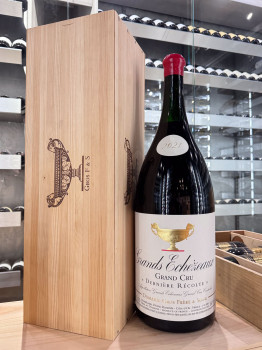
Grands-Échezeaux
Just next door, Grands-Échezeaux operates on a different scale. The climat covers just over 9 hectares, considerably smaller than Échezeaux. Its history dates back to the vineyards developed by the monks of Cîteaux during the Middle Ages. The climat, once associated with the name “Échezeaux bas”, gradually acquired its own identity before being recognised as a Grand Cru appellation in 1937. The terroir is relatively homogeneous, with clay-limestone soils resting on Bajocian limestone. In the glass, Grands-Échezeaux can combine depth, density and finesse, with a tightly structured texture that often requires several years to reveal its full breadth.
Romanée-Saint-Vivant
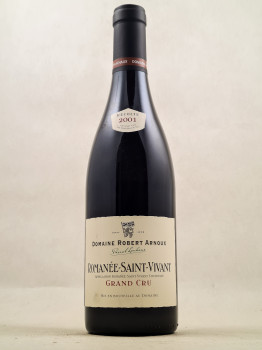
Descending towards Vosne-Romanée, one encounters Romanée-Saint-Vivant, one of the Grand Crus most closely associated with the history of the village. Its name recalls the priory of Saint-Vivant de Vergy, whose monks played a role in developing these lands during the Middle Ages. The climat now covers just over 9 hectares. Located on a gentle east-facing slope, Romanée-Saint-Vivant benefits from a particularly favourable exposure. Its brown limestone soils, rich in clay and sufficiently deep, allow Pinot Noir to develop wines that are both structured and refined. It is often this combination of power and elegance that defines the charm of Romanée-Saint-Vivant. The fruit may be accompanied by floral, spicy and earthy notes, gradually evolving towards nuances of leather, humus and undergrowth with age.
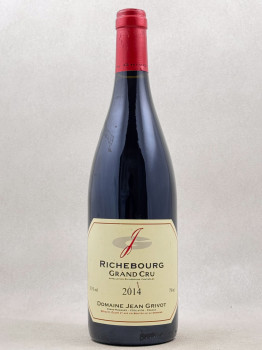
Richebourg
Richebourg bears a name that almost seems to have been created for the world of great wines. Covering around 8 hectares, it is one of the most substantial Grand Crus of Vosne-Romanée in terms of surface area, while never losing the sense of rarity associated with the great climats of the Côte de Nuits. Its position on the slope allows it to benefit from a particularly favourable combination of exposure, gradient and soil composition. Premeaux limestone forms the geological foundation of this part of the vineyard, while the brown limestone and clay soils vary according to the position on the slope. In the glass, Richebourg is generally sought after for its depth and power, but also for its ability to retain a certain elegance. It is a wine that can impress in its youth and gain complexity with age.
La Romanée
Then comes La Romanée. At just 0.85 hectares, it is the smallest of the eight Grand Cru appellations of Vosne-Romanée. Located higher up the slope, on a pronounced gradient, it has relatively less clay-rich soils that contribute to its precise and elegant expression. The plot is also a monopole, today cultivated by Comte de Liger-Belair. A tiny plot, a single signature, and one of the most sought-after Grand Crus in Burgundy.
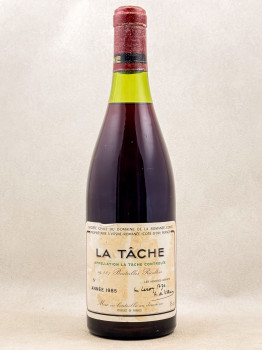
La Tâche
The name of La Tâche has become inseparable from one of Burgundy’s most famous estates, more precisely, Domaine de la Romanée Conti. A monopole of nearly 6 hectares. The climat stretches across the slopes of Vosne-Romanée, with brown limestone soils whose depth varies depending on the sector. The subsoil rests, as with the other great climats in the area, on hard Premeaux limestone dating from the Jurassic period. La Tâche produces wines that generally combine concentration, structure and length. With age, however, this power gradually reveals a more complex palette: ripe fruit, spices, undergrowth and tertiary nuances. This evolution is precisely part of the pleasure of great Burgundy wines: a bottle never tells exactly the same story at ten, twenty or thirty years of age.
La Grande Rue
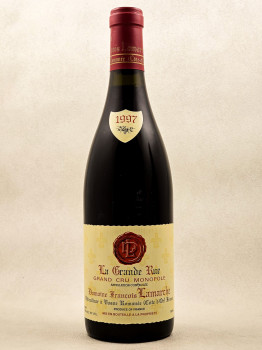
La Grande Rue occupies a singular place within this constellation. At just 1.65 hectares, it is one of the smallest Grand Crus of Vosne-Romanée. It is also the most recent of the eight appellations to have received Grand Cru status: official recognition dates from 1992, considerably later than its neighbours. La Grande Rue remains a monopole shaped first by the estate of Francois Lamarche, and today by Nicole Lamarche. Its position between several of the most prestigious climats of Vosne-Romanée contributes to its particular interest. In the glass, one finds the signature often associated with the great wines of Vosne-Romanée: dense fruit, precise structure and an evolution that becomes particularly fascinating with age.
Romanée-Conti
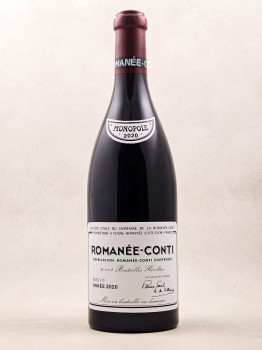
And then there is the monopole of Romanée-Conti. 1.81 hectares, an extremely limited production and a history that extends far beyond that of a simple vineyard plot. For centuries, its name has been associated with the very idea of rare wine. The modern history of the plot is notably marked by the Prince de Conti, who acquired the vineyard in 1760 and gave it his name. Since then, this plot has continued to fuel the imagination of wine lovers and collectors around the world. The terroir rests on relatively deep brown limestone soils, strongly marked by clay, above the Premeaux limestone. The plot is cultivated by Domaine de la Romanée Conti as a monopole. But beyond the figures and the history, Romanée-Conti reminds us of something essential about great Burgundy wines: their reputation is never based solely on rarity. It comes from the meeting of a place, a history, a grape variety and successive generations who have sought to preserve its expression.
Eight Grand Crus, eight ways of telling the story of Vosne-Romanée
For a wine lover, discovering Vosne-Romanée can be an introduction to another way of thinking about wine. It is no longer simply a question of seeking out an estate or a vintage, but of understanding the relationship between an estate and a plot. This is also what explains the special place these bottles occupy in collectors’ cellars. Their rarity is very real, but it is only part of the story. The great wines of Vosne-Romanée are also sought after for their ability to stand the test of time and gradually reveal a complexity that their youth does not always allow one to foresee.
An old bottle of Romanée-Saint-Vivant, Richebourg or Grands-Échezeaux thus tells a story that goes far beyond its vintage. It preserves a trace of a precise place on the Côte de Nuits and of a particular year. And when a bottle of La Romanée, La Tâche, La Grande Rue or Romanée-Conti enters a cellar, something else is taking place: the meeting between a tiny terroir, a centuries-old history and a wine whose production will, by definition, remain limited. In Vosne-Romanée, great wine therefore does not seek to impress through excess. It impresses precisely because everything seems to happen within a few hectares, a handful of plots and, sometimes, just a few hundred bottles.